1. Product Overview
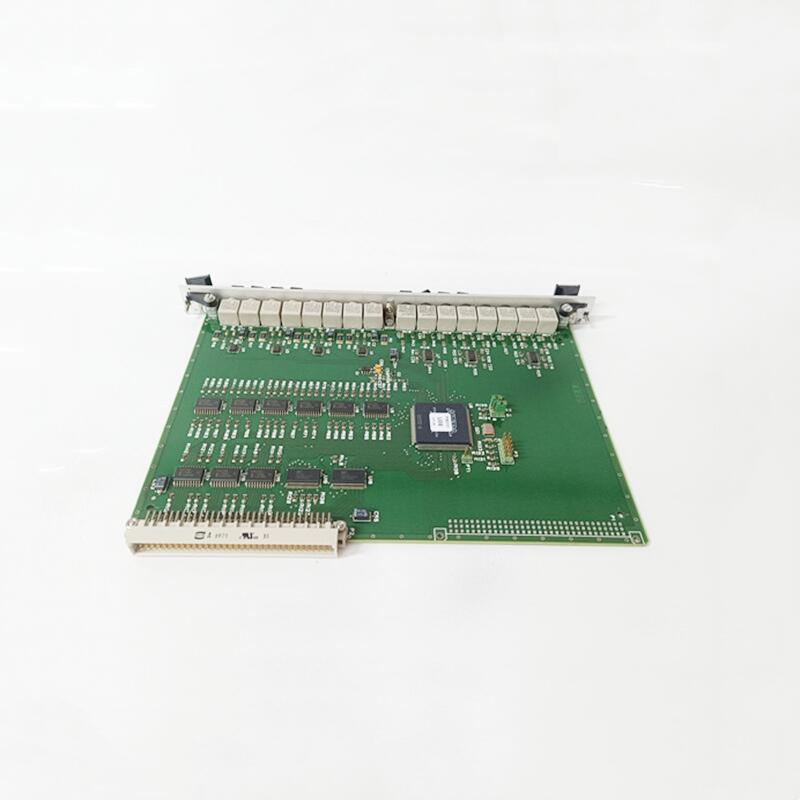
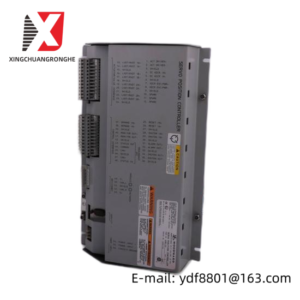
The BAUMULLER 3.0041D1.1 30041D11 is a compact, high-performance distributed digital input module belonging to the advanced b maXX automation product series of Baumüller (Germany). Equipped with a standard CANopen fieldbus interface, this module efficiently and reliably collects 16-channel discrete digital signals from industrial sites — including status signals from sensors, limit switches, push buttons, and relay contacts — and transmits them to upper-level PLC or IPC control systems.
More than a simple signal converter, the CAN-DI-16-01 functions as an intelligent bus slave node integrated with high-speed optoelectronic isolation, digital filtering, and comprehensive diagnostic capabilities. It effectively suppresses industrial electromagnetic interference (EMI), ensuring accurate digital signal acquisition even in high-noise industrial scenarios such as electric welding and frequency converter startup/shutdown. This delivers stable and credible data support for upper-system control decisions.
Fully compliant with the CiA (CAN in Automation) CANopen communication protocol (DS301), the module supports multiple communication mechanisms including NMT (Network Management), SDO (Service Data Object), and PDO (Process Data Object), delivering outstanding configuration flexibility and real-time performance. It features a rugged industrial plastic housing and supports standard DIN rail mounting. With a compact width of approximately 22.5mm, it greatly saves valuable cabinet installation space.
As a critical edge node in distributed I/O architectures, the module can be deployed close to on-site sensors. It realizes remote signal acquisition via a single bus cable, drastically reducing cabling costs and construction complexity compared with traditional point-to-point wiring. Ideal for new automation equipment development and digital input expansion of existing systems, the BAUMULLER CAN-DI-16-01 provides system integrators and end users with a cost-effective, highly reliable signal acquisition solution.
2. Product Specifications
|
Parameter Item
|
Specification Value
|
|
|
|
Manufacturer
|
Baumüller (Germany)
|
|
Product Type
|
Distributed CANopen Bus Digital Input Module
|
|
Input Channels
|
16 digital input channels
|
|
Input Type
|
Configurable PNP (sourcing) / NPN (sinking), subject to specific version and wiring mode
|
|
Rated Input Voltage
|
24 VDC (typical); allowable range: 18 ~ 30 VDC
|
|
Input Current (per channel)
|
5 mA typical @ 24 VDC
|
|
Input Delay
|
< 1 ms typical (configurable digital filtering)
|
|
Electrical Isolation
|
Optoelectronic isolation; 500 VDC isolation voltage (between channels and bus)
|
|
Bus Interface
|
1 × CANopen (CAN physical layer); D-sub 9-pin or open terminal (version-dependent)
|
|
Communication Protocol
|
CANopen DS301; supports NMT, SDO, PDO, EMCY, etc.
|
|
Baud Rate
|
10 kbit/s ~ 1 Mbit/s (auto-detectable or configurable)
|
|
Node ID Configuration
|
Rotary DIP switch or software configuration
|
|
Module Supply Voltage
|
24 VDC (system power or external power terminal)
|
|
Power Consumption
|
2 W typical (excluding external load)
|
|
Operating Temperature
|
-25°C ~ +55°C
|
|
Storage Temperature
|
-40°C ~ +85°C
|
|
Ingress Protection
|
IP20 (for cabinet installation only)
|
|
Mounting Type
|
Standard 35mm DIN rail mounting
|
|
Certifications
|
CE, UL (typical)
|
3. Structure & Composition
The BAUMULLER adopts a modular and functional partition design typical of premium German industrial products. Physically, the module consists of three core functional areas: the front-end signal input and isolation zone, the central logic control and data processing zone, and the rear-end bus communication and power interface zone.
The front-end signal input zone features 16 independent digital input terminals with complete signal conditioning circuits for each channel, including current-limiting resistors, TVS (Transient Voltage Suppression) diodes, and high-speed optocouplers. As the core isolation components, optocouplers fully separate the 24V field-side signals from the module’s internal low-voltage logic circuits, protecting rear-end control hardware from surge voltage and common-mode voltage damage.
The central logic and data processing zone serves as the intelligent core of the module, equipped with a high-performance 16-bit/32-bit MCU and non-volatile EEPROM for storing configuration parameters and communication objects. The MCU performs real-time scanning of 16 input channel status changes and runs configurable digital filtering algorithms to eliminate signal misjudgment caused by mechanical contact jitter and high-frequency on-site noise. Stabilized filtered signal states are mapped to CANopen PDOs for cyclic polling or event-triggered transmission via the bus.
The rear-end communication and power zone integrates a CAN transceiver and isolated DC-DC power conversion module. The CAN transceiver converts MCU logic-level signals into ISO 11898-compliant differential bus signals, enabling reliable long-distance communication up to several kilometers. The power module supplies stable operating voltage for all onboard circuits and realizes electrical isolation between system power and field power.
4. Core Features & Advantages
4.1 High Channel Density & Compact Design
Integrating 16 independent digital input channels in a miniaturized form factor, the CAN-DI-16-01 optimizes cabinet space utilization. For applications requiring massive digital signal acquisition, it reduces the total number of required modules, simplifies system architecture, and lowers overall hardware and installation costs.
4.2 Flexible Signal Adaptability & Strong Anti-Interference Performance
Supporting both PNP and NPN wiring modes, the module is compatible with mainstream 2-wire and 3-wire proximity sensors and photoelectric sensors. The built-in configurable digital filtering function allows engineers to adjust input delay according to actual on-site electromagnetic environments, effectively filtering false signals induced by line interference or mechanical jitter. The 500 VDC optoelectronic isolation further enhances durability and stability in harsh industrial working conditions.
4.3 Reliable Bus Communication & Seamless Integration
Based on the mature CANopen DS301 protocol, the module supports plug-and-play connection with mainstream PLC brands including Siemens, Beckhoff, and Bosch Rexroth. It supports Change-of-State (CoS) PDO event-triggered transmission, which uploads data to the master station immediately once signal status changes, instead of waiting for periodic polling. This significantly improves system response speed to emergency signals such as emergency stops, critical for the safety protection of high-speed automated equipment.
5. Application Fields
Packaging & Printing Machinery: It collects signals from paper arrival sensors, color mark sensors, safety door switches, and button panels, feeding real-time equipment status to the main controller via high-speed CANopen bus to realize precise tension control and color mark tracking.
Woodworking & Metal Processing Machine Tools: The module reliably acquires signals from limit switches, proximity switches, and tool detection sensors, ensuring processing safety and machining accuracy.
Logistics & Automated Warehousing: Deployed beside sorting lines and elevators, it detects photoelectric obstacle signals, barcode reader trigger signals, and conveyor speed pulses. The distributed architecture eliminates the need for centralized long-distance wiring, greatly reducing cabling costs and maintenance difficulty.
New Energy & Automotive Manufacturing: It serves as a key signal acquisition component for workstation sensors and fixture status in power battery assembly lines and automotive production workshops, providing solid data support for smart manufacturing and flexible production.
6. Installation & Maintenance
6.1 Pre-Installation Preparation
Ensure the cabinet meets IP20 protection requirements and the ambient temperature ranges from -25°C to +55°C. Clip the module onto a standard 35mm DIN rail and confirm firm fixation. Reserve a minimum 20mm heat dissipation gap between adjacent modules. Cut off the entire system power before electrical connection.
Connect 24 VDC power to the module terminals with correct polarity. Use standard shielded twisted-pair cables for CAN bus (CAN_H / CAN_L) wiring, and install 120Ω terminal resistors at both ends of the bus. Set the Node ID and baud rate via the onboard rotary DIP switch to match the master station configuration.
6.2 Routine Maintenance Guidelines
The modules is a low-power solid-state electronic device with minimal daily maintenance requirements. Conduct quarterly routine inspections: check the PWR power indicator and RUN/ERR bus status indicators (steady PWR for normal power supply, flashing RUN for active communication, steady ERR for bus faults). Regularly verify the tightness of power and bus wiring terminals to avoid loosening caused by thermal expansion and contraction.
Always cut off the 24V field power before replacing on-site sensors to prevent channel damage from hot plugging. For abnormal input signals, perform quick troubleshooting by swapping sensors or transferring signal wires to adjacent normal channels to distinguish external sensor faults from internal module channel faults.
7. Product Warranty & Technical Support
All modules are sourced from official and reliable supply chains, guaranteed to be genuine Baumüller products or fully tested compliant spare parts. We provide a 12-month quality warranty from the delivery date, covering material and process defects under normal operating conditions.
Our professional technical team specializes in Baumüller automation products, delivering one-stop services including model selection consultation, bus configuration guidance, and on-site fault diagnosis. Sufficient stock of the CAN-DI-16-01 and series products enables rapid response to urgent customer demands, ensuring continuous and stable operation of customer equipment.

Reviews
There are no reviews yet.